Lunar New Year 2027Saturday 6 February
Red envelopes: who gives, who gets, and how much
The red envelope is the custom everyone has heard of and most people are nervous about. The rules are simpler than they look. Red envelopes are given by married adults to children and unmarried younger relatives, the amount matters far less than the gesture, and the colour and the way you hand it over matter more than the money. Here is how it works, for the Year of the Fire Goat or any other.
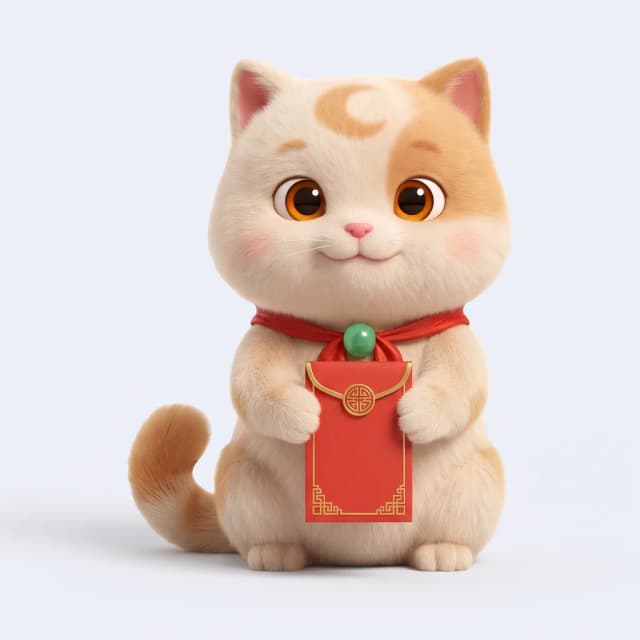
What they are
A red envelope is a small packet of money given at Lunar New Year, called hóngbāo in Mandarin, lai see in Cantonese and lì xì in Vietnamese. The money inside is called "lucky money" and is less a payment than a blessing: the red paper is believed to protect the receiver from misfortune for the year ahead. Korea has the same gift, sebaetdon, given after children perform their new year bow, though the envelope there is often white or patterned rather than red.
Who gives, and who receives
- Married adults give to children, to unmarried younger relatives, and often to the children of friends who visit. Marriage, not age, is the usual line: a married 25-year-old gives, an unmarried 40-year-old can still receive.
- Adult children give to their parents and grandparents, usually a larger amount, as a sign of respect and thanks. This one is received with great ceremony and often not spent.
- Employers give to staff, traditionally on the first day back at work. In Hong Kong, lai see also goes to the doorman, the cleaner and anyone who looks after you through the year.
- Unmarried adults usually do not give, and nobody expects them to. If you are single and want to join in, give to the small children in the family and keep the amounts token.
How much to put in
The honest answer is that it depends on where you are, how close you are and what the family normally does, and the easiest way to get it right is to ask a relative what they give. Some rules hold everywhere:
- Even numbers, because good things come in pairs. Odd amounts are for funerals.
- Avoid the number four in any position, since it sounds like the word for death in Chinese. So not 4, 40 or 400.
- Eight is the lucky number, because it sounds like "prosper". Amounts with an 8 in them, or a 6 (smooth), are popular. Nine, which sounds like "long-lasting", is fine too.
- New, crisp notes, one or two of them rather than a handful of small change. People queue at banks in the last week of the year for fresh notes for exactly this reason.
- Scale by relationship. A token amount for the children of acquaintances, more for nieces and nephews, the most for your own children and your parents. It is normal for the same person to give three different amounts on the same day.
If you are outside Asia and handing envelopes to friends' children, a small even amount in the local currency, with no four in it, is exactly right. Nobody is counting.
How to give one
- Say the greeting first. The child, or the younger person, offers a new year wish, often with hands pressed together or a small bow. The envelope comes after the greeting, not before.
- Both hands. Hand it over with both hands and a smile. Receive with both hands too, and say thank you with a wish of your own.
- Do not open it in front of the giver. The envelope goes in a pocket or a bag. Checking the amount on the spot is the one real breach of manners.
- Prepare in advance. Fill a stack of envelopes before the first visit and keep them in your bag through the fifteen days. Running out, or handing over loose cash, is the thing people most regret.
The envelope itself
Red or gold, with a lucky character or an image of the year's animal: Goat envelopes will be everywhere this year, and since the Goat, Sheep and Ram are the same sign you will see all three drawn. Never white, which is the colour of mourning in Chinese tradition. Envelopes printed with your family name are a nice touch but not expected. Many people now send digital red envelopes through payment apps, and for family far away that is completely acceptable; the amount rules still apply.
Vietnam and Korea
Vietnamese lì xì follow the same pattern: red envelopes, new notes, elders to children, with the amount scaled to closeness, and it is common to give to parents and grandparents as well. Korean sebaetdon is tied to the bow: the child kneels and bows deeply, the elder offers words of advice or blessing, and then the money. Korean envelopes are often white, which surprises Chinese friends, so do not read anything into it.
The Year of the Fire Goat
Lunar New Year 2027 begins on 6 February 2027 and starts the Year of the Fire Goat, which runs until 25 January 2028. The Goat, Sheep and Ram are the same sign. Find your sign and see what 2027 holds for it.
Know your lucky days in 2027.
The Lucky Year app reads your full Purple Star chart and gives you lucky days for the whole year.